
Opening a cafe in South Africa doesn’t have to cost a fortune, but the wrong furniture choices can quietly drain your budget and need replacing within a year.
Whether you’re fitting out a coffee shop in Cape Town’s CBD, a neighbourhood cafe in Johannesburg, or a small espresso bar in Durban, the furniture decisions you make at the start will either save or cost you money over time. This guide covers how to furnish a cafe on a budget in South Africa without compromising on quality, durability, or the atmosphere that keeps customers coming back.
Why Cafe Furniture Is a Long-Term Investment, Not a Short-Term Cost
The temptation when fitting out on a tight budget is to buy the cheapest chairs and tables available. It’s understandable, startup costs are real, and cash is tight. But cheap hospitality furniture that fails within 18 months forces you to replace everything at exactly the wrong time: when you’re deep in operations and have no budget left for capital expenditure.
Commercial-grade furniture built for hospitality use is engineered to handle being moved, stacked, sat on, and wiped down dozens of times a day. The cost difference between budget and commercial-grade is often 20,40%, but the lifespan difference is frequently 5x or more. Over a four-year horizon, buying quality once almost always beats buying cheap twice.
How Many Seats Do You Actually Need?
Before you spend anything, calculate your seating requirement properly. Overcrowding a small cafe makes it feel uncomfortable and compromises service. Underfurnishing means lost revenue. A general rule for South African cafe formats:
For a standard table-service coffee shop, allow 1.5 to 2 square metres per seated customer. A 60 m² space seats roughly 30,40 people comfortably with circulation space for staff. Buy to your actual floor plan, not a round number, and factor in that counter stools or bar-height seating along a window ledge can add 4,6 covers with minimal floor space.
This matters for budget planning: a 32-seat cafe needs roughly 32 chairs, 8,10 tables (mix of 2- and 4-tops), and 4,6 bar stools if you’re running a counter seating section.
The Best Budget-Smart Furniture for South African Cafes
The goal is commercial-grade quality at the most efficient price point. These three products are what we recommend most often to cafe owners fitting out on a tight budget.
The Tom Low Stool (45cm) is a counter-height stool that works in almost any cafe format, at a coffee bar, along a window ledge, or as informal seating at low communal tables. It’s lightweight, stackable, and built from UV-stabilised polypropylene, which means it handles both indoor and outdoor use without degrading. For cafes with a covered outdoor section, this versatility is worth a lot.
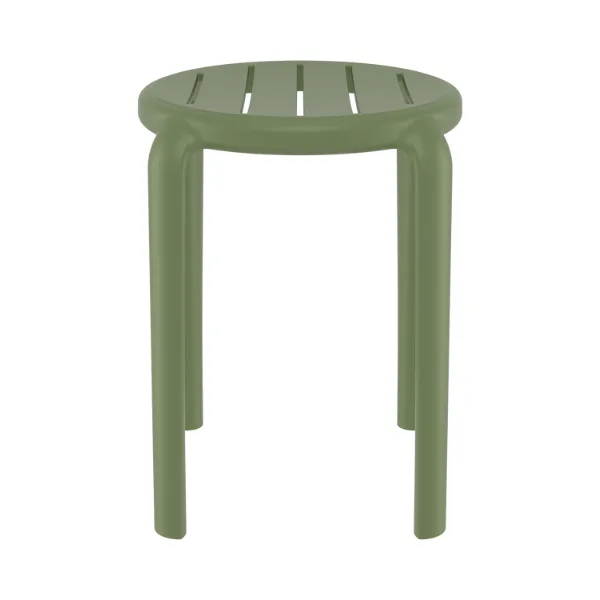
Tom Low Stool (45cm), stackable, versatile, built for daily commercial use
For your main dining tables, the Mika Dining Table (120x80cm) is a practical choice that suits the typical South African cafe format. The 120x80cm footprint is the workhorse size for hospitality, comfortably seats four, fits tightly in a row, and works for both individual diners and small groups. Clean lines mean it suits everything from a minimalist specialty coffee shop to a more relaxed neighbourhood spot.

Mika Dining Table (120x80cm), the standard hospitality workhorse size
For bar-height counter seating, the Air Bar Stool is one of the best value-for-money options in the Chair Crazy range. Lightweight PP construction, a clean profile, and a stackable design that makes end-of-day cleanup fast. It’s been deployed in cafes and coffee shops across South Africa and holds up in the kind of daily commercial use that destroys budget stools quickly.
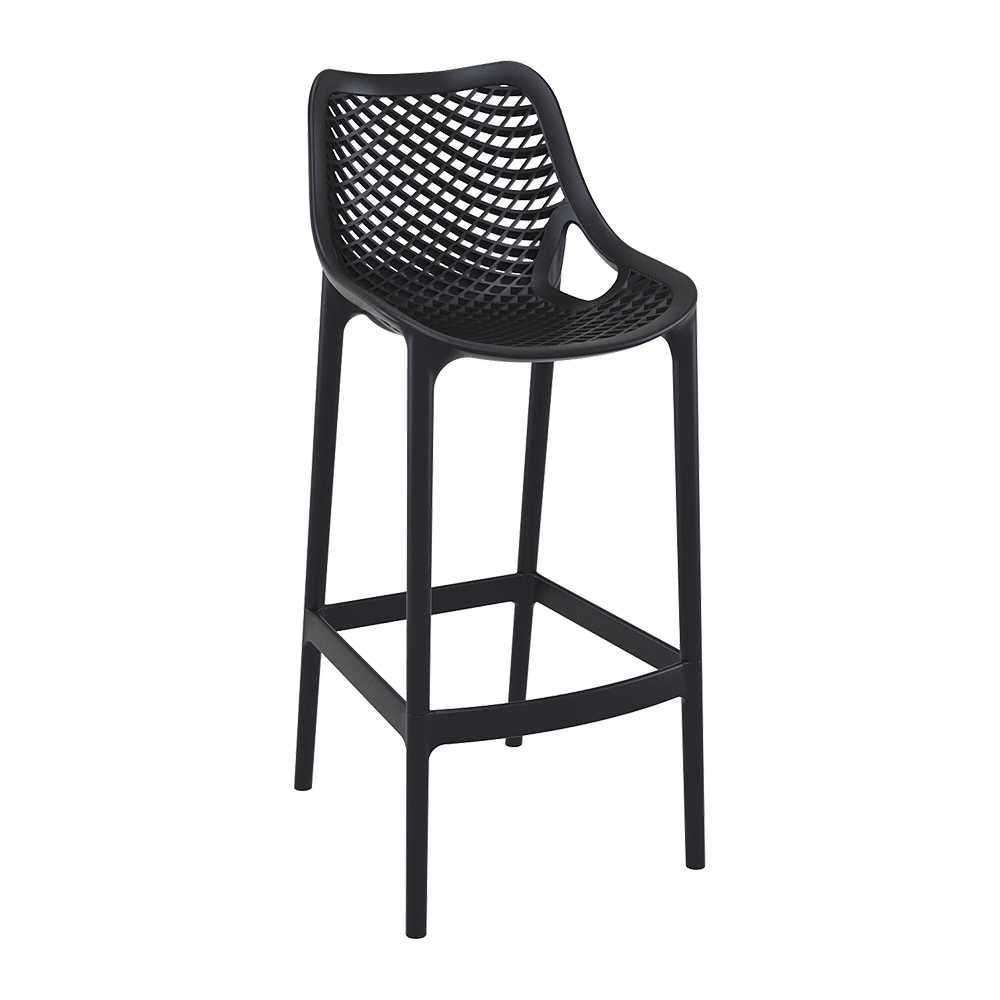
Air Bar Stool, lightweight, stackable, and built for commercial daily use
How to Stretch Your Furniture Budget Further
Buy in volume from a single supplier. Splitting your order across multiple suppliers to save a few rand per item rarely saves money once you factor in delivery costs, time, and the inconsistency of mixing styles. A coherent visual aesthetic also photographs better for social media, which matters for a new venue trying to build an audience.
Prioritise stackability. Stackable chairs and stools dramatically reduce storage needs and make closing-time cleanup faster. In a small cafe where space is tight, this matters practically, and in a venue that does events or needs to rearrange regularly, it’s essential.
Choose neutral colours for longevity. Trendy colour choices date quickly. Charcoal, white, black, and warm grey work across multiple interior styles and don’t look tired when trends shift. If you want colour in the space, use it in cushions, walls, and accessories, not in fixed seating you’ll be living with for five years.
Factor in outdoor seating from day one. Even a small covered sidewalk or courtyard section can add 6,10 covers at minimal additional furniture cost, and those covers often generate disproportionate revenue, people actively choose outdoor seating in good weather. Make sure at least some of your chairs and stools are UV- and weather-resistant from the start.
What to Avoid When Buying Cafe Furniture in South Africa
Avoid solid timber chairs for high-traffic commercial use unless your aesthetic genuinely requires them and your budget includes annual maintenance. Timber scratches, joints loosen, and finishes wear, in a busy cafe, you’ll be sanding and refinishing within two years.
Avoid rattan or wicker for anything other than a covered, low-traffic outdoor area. In the South African climate, UV, humidity swings, and occasional damp, synthetic rattan degrades fast and real rattan is a maintenance burden.
Avoid chairs without glides or floor protectors. In a tiled or polished concrete cafe floor (the dominant flooring choice in South African commercial interiors right now), unprotected chair legs will scratch the floor and create noise complaints within weeks.
Furnishing a Small Coffee Shop: A Budget Template
As a rough guide for a 30-seat cafe with a small counter bar section, a realistic starting furniture budget using commercial-grade products from Chair Crazy:
20 dining chairs + 10 bar stools + 8 dining tables gives you a well-furnished space with a mix of seating formats. The Tom Low Stool, Air Bar Stool, and Mika Dining Table combination delivers a coherent, contemporary look that suits most South African cafe aesthetics, from the specialty third-wave coffee shop to the casual neighbourhood spot.
If your budget is tighter, start with fewer tables and prioritise the bar/counter section, it’s typically the highest-revenue seating per square metre in a cafe format.
Ready to Furnish Your Cafe?
Browse our full restaurant and cafe furniture range, commercial-grade products supplied to venues across South Africa.
Visit us in person:
Cape Town: 176 Sir Lowry Road, Woodstock
Johannesburg: Unit 2, 64 Lechwe Street, Midrand
[email protected]